
The dust your office is hiding
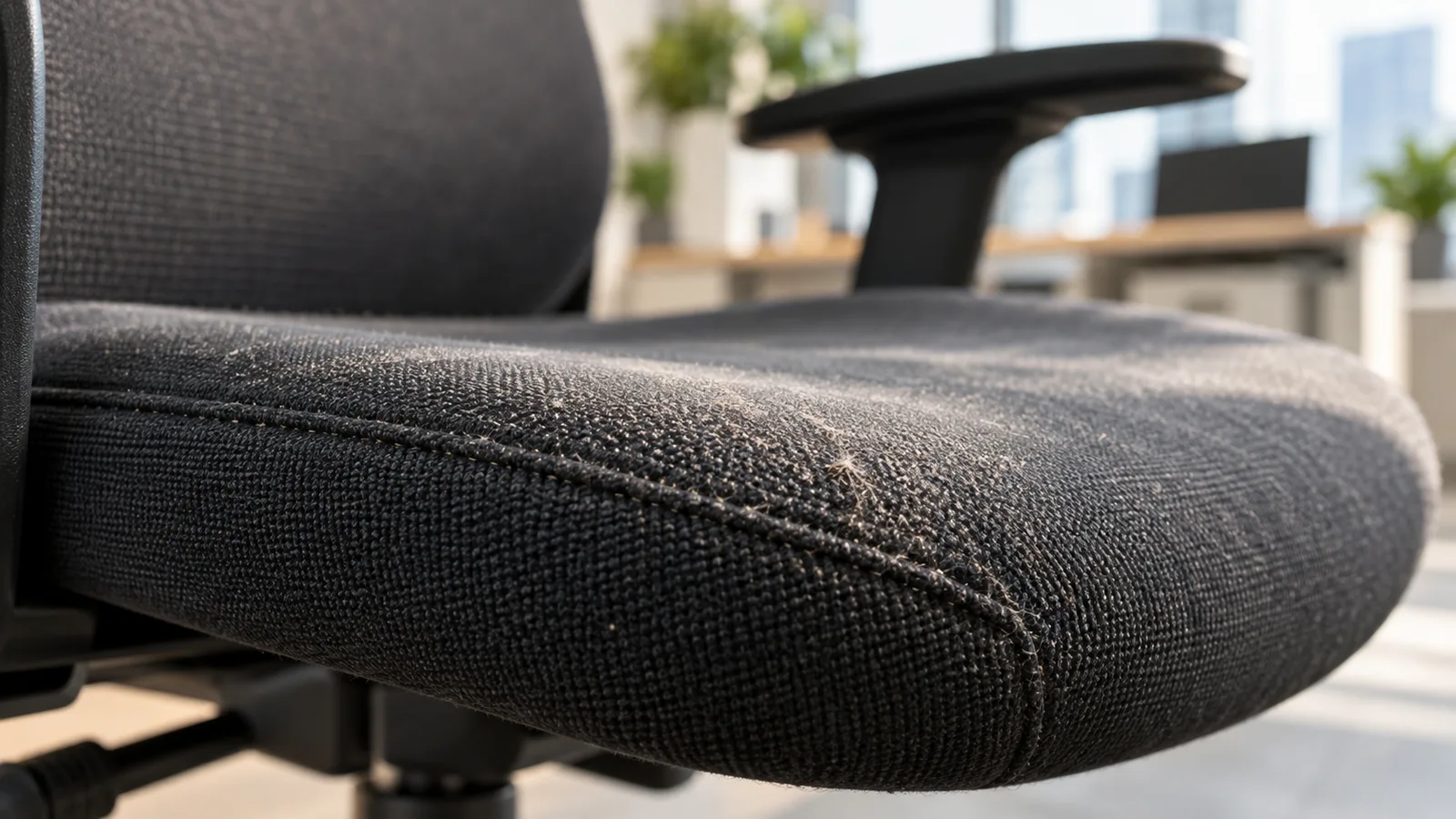
Chairs, soft furnishings, and ventilation: why the dust comes back, and what is worth checking.
You wipe the desk and, before long, another layer of dust appears. Before asking for an extra pass, it is worth looking around: the chair, the soft furnishings, the high surfaces, and the air system are all part of the space that needs looking after.
The chair belongs in the cleaning plan too
A chair without a single stain can still hold dust in its fibres and seams. The seat, the back, and the joints deserve attention even when the furniture looks presentable. Steelcase recommends vacuuming upholstery regularly with a suitable attachment to lift dust and lint.
The method depends on the material. Some fabrics take water-based products; others need a different procedure altogether. Before any deep clean, identify the upholstery, check the manufacturer's instructions, and plan the drying. Wetting every chair the same way can damage its components. That distinction between fabric types is the basis of carpet and upholstery washing. [1]
Dust can go back into the air
Settled dust can be lifted by foot traffic and by certain cleaning tasks. The EPA explains that a dampened cloth helps limit that dispersal, and that HEPA filtration can reduce the dust escaping from a vacuum cleaner.
The operational goal is to capture it and take it away. Include soft furnishings and the spots left out of the scope, use the right method for each surface, and track which areas build it up again. In a corporate cleaning programme that becomes a matrix of zones and frequencies, not a series of loose passes.
The air conditioning needs attention as well
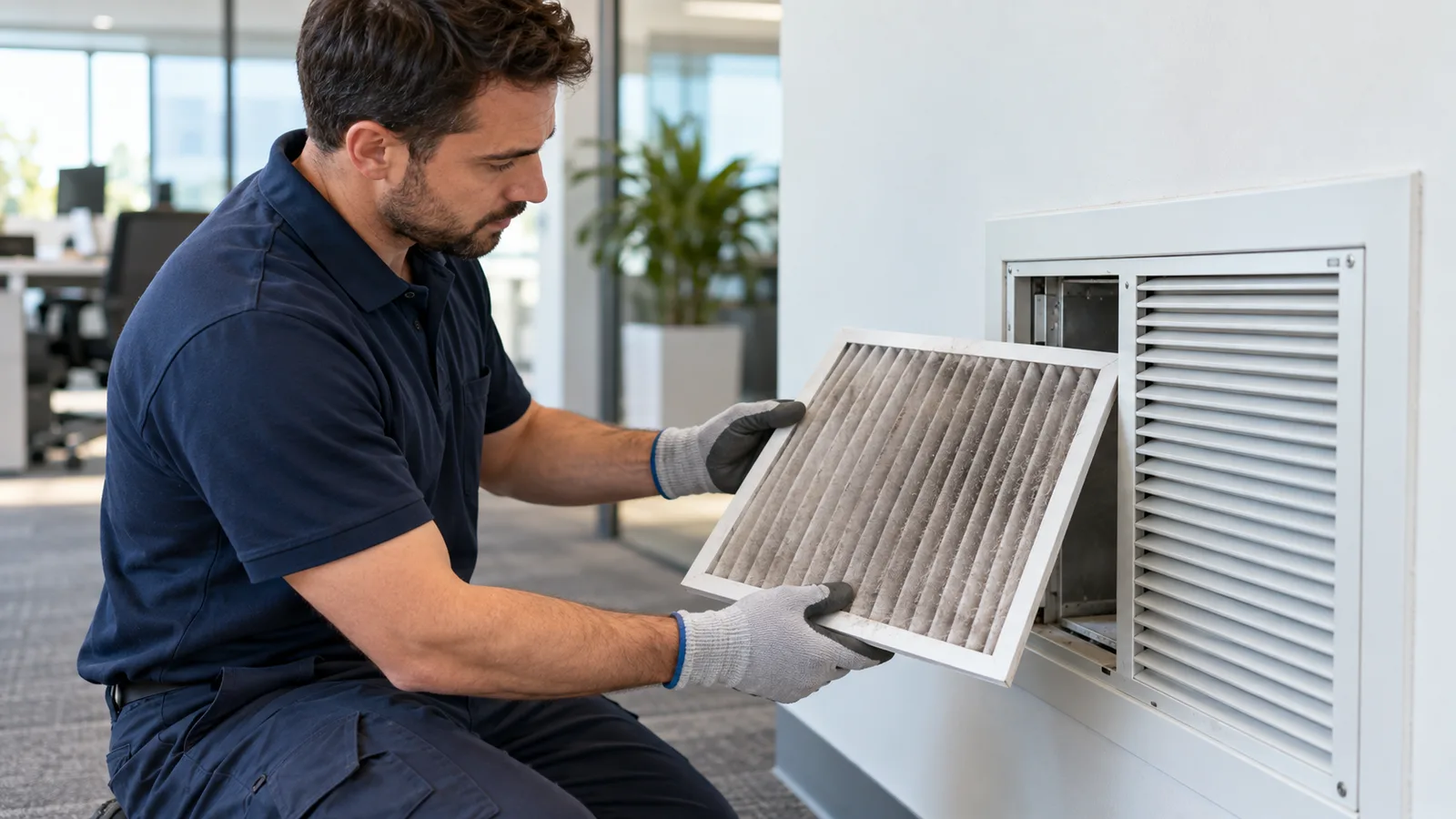
Ventilation shapes how particles are distributed and removed. The EPA's guidance for office buildings notes that these systems can become sources of contaminants under certain conditions, such as contaminated filters or moisture problems. Cleaning and building maintenance therefore have to be coordinated.
If the dust keeps returning, ask for filters, grilles, returns, and the overall state of the system to be checked. A dirty duct cannot be blamed without an inspection: particles also come in from outside or are generated indoors. The intervention should follow the findings, and competent personnel should carry it out. When cleaning and technical maintenance sit under the same contract, that coordination stops depending on two separate vendors — which is what facility management covers.
Four improvements you can ask your provider for
- Soft-furnishing checks. Cover chairs and other upholstered items with procedures suited to their materials.
- Dust capture. Ask which vacuuming and filtration will be used, and how seams, corners, and high surfaces will be handled.
- A recurrence map. Record where the dust reappears, when it is noticed, and what activity preceded it. Use that to direct the inspection.
- Technical coordination. Connect the cleaning findings to whoever maintains the air system, and document what is agreed.
Measuring can help you investigate
Particle sensors can give readings useful for following trends. They have to be read with their limitations in mind: a single reading identifies neither the source of the dust nor the health of the environment. [4]
Request a proposal
Does the dust keep coming back in your office? Tell Go Cleaning which areas are affected and request a proposal setting out surfaces, methods, and follow-up. If you want to weigh several before deciding, there is the guide on how to choose a cleaning company.
Request a proposalSources consulted
- [1] Steelcase · Upholstery and materials care
- [2] EPA · Particle sources and indoor dust control
- [3] EPA · Indoor air quality in office buildings
- [4] EPA · Scope and limits of indoor air monitors
Spotless facilities, frictionless operations.
Message us on WhatsApp