
How to choose a cleaning company for offices and businesses in Panama
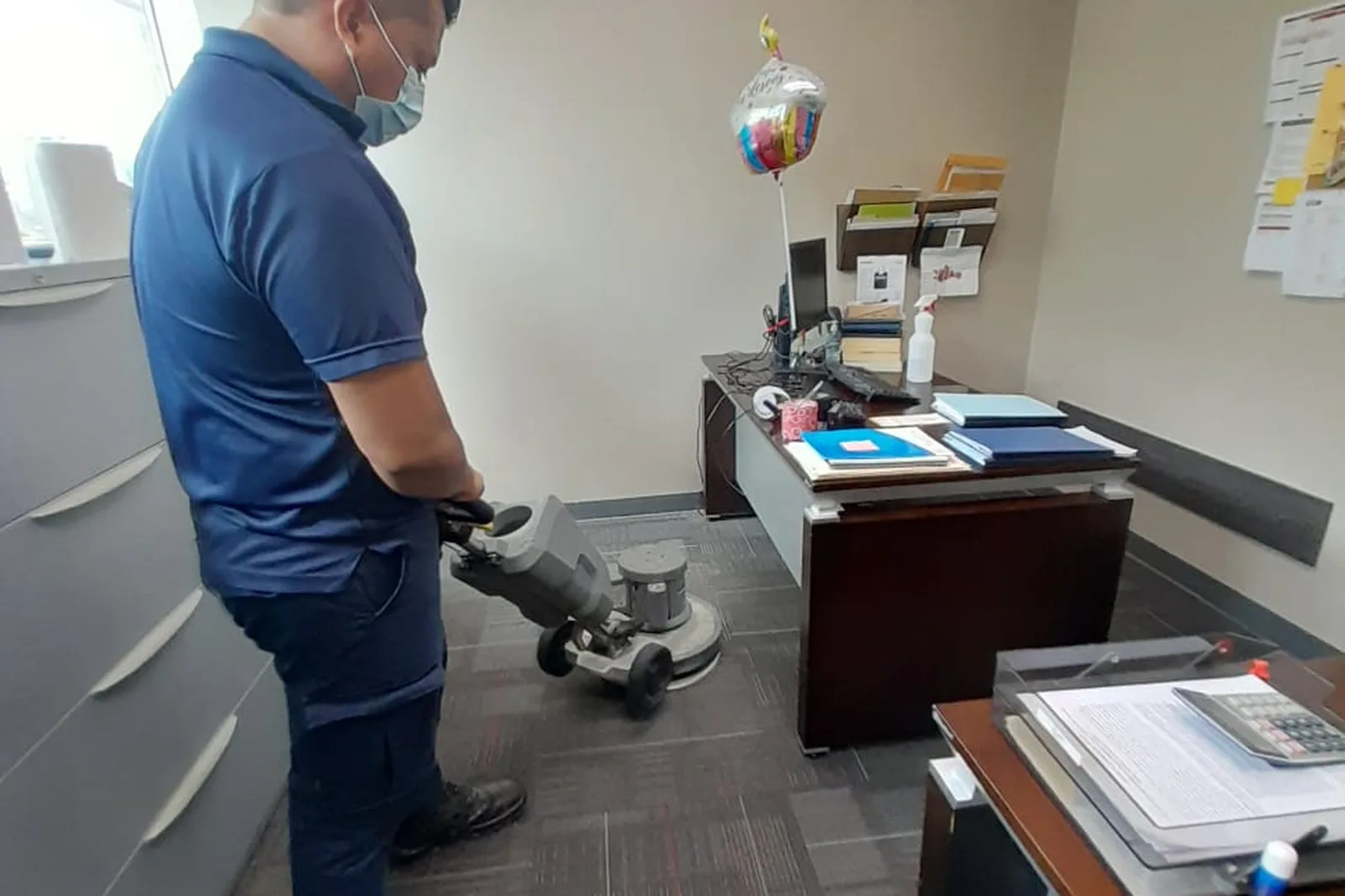
To choose a cleaning company for offices, banks, clinics, schools, warehouses, plants, retail, or any other facility in Panama, compare the scope of the service, the experience in similar facilities, the staff assigned, the supervision, the absence cover, the products and equipment included, and how quickly the provider responds.
The monthly price should be weighed after you confirm that the proposals describe equivalent conditions. A good quote makes clear what will be cleaned, how often, in what hours, with how many people, who supplies what, and how the service will be checked. If what you are comparing right now is figures, the breakdown of the factors behind a quote is in how much office cleaning costs in Panama.
What should a professional cleaning company have?
For a recurring commercial cleaning service, these are the points worth assessing:
- Experience in similar facilities
- Trained staff
- Supervision
- Attendance tracking
- A procedure for replacing absent staff
- Suitable equipment and tools
- Defined cleaning products
- Tasks and frequencies in writing
- A named account manager
- Capacity to handle incidents
- The corresponding corporate and employment documentation
- References from other clients
Not all of them carry the same weight for every company. A small office has different needs from a hospital, a plant, a school, or a company with several branches.
Does the company have experience in facilities like yours?
This should be one of the first questions. Cleaning an administrative office is not the same as cleaning a clinic, a school, a warehouse, or an industrial facility: the surfaces, the flow of people, the risks, the hours, and the required frequencies all change.
Ask directly what experience the provider has with facilities like yours, and request client references when the size or nature of the contract warrants it. Protocols differ considerably from one sector to the next — you can see how in the industries we serve.
Relevant experience is not simply years in the market. What matters is whether the provider can run an operation comparable to the one you need to contract.
What exactly does the cleaning service include?
This is one of the most important points when comparing quotes. A proposal should specify the tasks included and how often each is performed. For example:
- Daily. Floors, restrooms, workstations, reception, common areas, and waste removal.
- Weekly. Certain surfaces, lower-traffic areas, and details that do not need daily attention.
- Periodically. Deep cleaning, floor washing or treatment, carpets, glass, and specialised work.
Frequencies have to fit the facility. When a quote just says "monthly cleaning service" without defining tasks and frequencies, it becomes far harder to judge later whether the provider is delivering. This is how a corporate cleaning programme is structured by zone and frequency.
How many cleaning staff does my company need?
There is no standard headcount that works for every facility. Determining the staffing required means weighing variables such as:
- Square metres
- Number of occupants
- Number of restrooms
- Common areas
- Type of flooring
- Number of workstations
- Visitor traffic
- Operating hours
- Tasks required
- Service frequency
Two 1,000 m² offices can call for very different operations if one has 30 staff and the other receives hundreds of people a day. That is why sizing a service purely by square metres falls short.
Why is a site visit worth doing before quoting?
For recurring contracts, a site visit reveals the real condition of the facility before anyone commits to staffing, hours, and frequencies. The assessment should look at:
- Size and layout
- Restrooms, floors, carpets, and glass
- Reception, kitchens, or cafeterias
- High-traffic areas and access points
- Outdoor areas
- Hours available to work
- Storage for products and equipment
- Any particular needs of the operation
With this information a far more precise scope can be drawn up. It also reduces the risk of accepting a cheap quote that later needs revising because the provider never saw the whole facility.
Who provides the products, equipment, and supplies?
This must be settled in the quote itself. Depending on the contract, the cleaning company may provide chemicals, tools, vacuum cleaners, floor machines, cleaning carts, hand tools, and protective equipment.
Restroom consumables — toilet paper, soap, bags, and hand towels — are often handled differently. Do not assume everything is included: ask directly what the cleaning company supplies and what you are expected to supply. This is what makes two proposals genuinely comparable and prevents costs appearing later.
What happens when cleaning staff are absent?
This question matters especially in recurring services. Holidays, sick leave, personal leave, and turnover are part of any operation; what differs is how the provider manages them. Before contracting, ask:
- How do you cover absences of the assigned staff?
- Who coordinates the replacement?
- What happens when you only learn of the absence that same day?
When a company outsources a service, one of the reasons for doing so may be precisely to stop its own administrative team from having to resolve every absence. Continuity of service therefore belongs in the evaluation, and it is what separates a staff outsourcing arrangement from direct hiring.
How is the cleaning staff supervised?
Having staff assigned does not mean the service is being delivered properly. There has to be a follow-up mechanism. Depending on the contract, it may include:
- Scheduled supervision and inspections
- Checklists
- Attendance tracking
- Incident reports
- Meetings with the client
- Evidence of work performed where appropriate
- Compliance indicators
It also matters who will own your account. When a problem comes up, the client should know exactly who to contact without having to manage the assigned operator directly.
How do you measure the quality of a cleaning service?
Before the contract begins, it is worth agreeing what is expected of the service. Useful indicators can include:
- Attendance and punctuality
- Completion of tasks
- Adherence to frequencies
- Inspection results
- Number of incidents, and whether problems recur
- Response time
- Completion of periodic work
Larger operations may set KPIs or service level agreements (SLAs). Not every contract needs a complex set of indicators: what matters is that client and provider share clear criteria for judging the result.
What documentation should a company request?
The requirements depend on the client's internal policies and the type of facility. For corporate or institutional procurement, it may be appropriate to request, as applicable:
- The company's legal information
- Commercial references
- Experience in similar contracts
- Applicable employment documentation
- Any required policies or insurance
- Occupational safety information
- Product lists and equipment information
- Work procedures or schedules
Companies with Procurement, HR, Occupational Safety, Facilities, or Compliance departments may have further requirements. It is best to define them before selecting the provider, not after.
Is the cheapest cleaning company the best choice?
Not necessarily. Before comparing prices you have to confirm that the proposals cover equivalent scopes. One company may be quoting staff, supervision, products, equipment, and replacements, while another is quoting staff alone.
Even though the second proposal carries a lower price, you are not comparing the same service. Before deciding, check what each price includes and what costs could surface later.
How do you compare cleaning quotes?
A simple matrix makes this far easier. Score each provider against the same criteria, in this order, and leave price until last:
- Staff assigned
- Hours
- Frequency
- Tasks included
- Products
- Equipment
- Consumables
- Supervision
- Attendance tracking
- Absence cover
- Periodic deep cleans
- Account manager
- Comparable experience
- References
- Required insurance
- Monthly price
Laying the sixteen criteria side by side makes it obvious why one proposal costs more or less than another. If you would rather have a ready-made tool for auditing the service once it is running, there is the cleaning inspection checklist.
Outsource cleaning, or hire your own staff?
It depends on each company's operation. With in-house staff, the company takes on recruitment, training, supervision, uniforms, absences, holidays, turnover, and personnel administration directly. Under an outsourcing arrangement, those responsibilities can transfer to the provider as set out in the contract.
To weigh the two options, comparing one person's salary against a cleaning company's monthly invoice is not enough. The comparison has to account for the cost and the management of the whole operation. When technical maintenance and supply replenishment are needed under the same contract, that falls under facility management.
What should you ask before hiring a cleaning company?
Ten questions worth taking into a meeting with a provider:
- Do you have experience with companies in our sector?
- How did you arrive at the headcount you are proposing?
- Which tasks are included, and how often will they be done?
- Who provides products, equipment, and consumables?
- How do you track staff attendance?
- How do you cover holidays, sick leave, and absences?
- How do you supervise the service?
- Who will own our account?
- How are complaints handled, and how quickly?
- Which services are billed separately?
The answers should match the written scope of the proposal or contract afterwards. If they do not, that is information in itself.
What mistakes should you avoid when hiring a cleaning service?
The mistakes that tend to cause trouble later are:
- Choosing on price alone
- Signing without knowing the scope
- Leaving frequencies undefined
- Not establishing who supplies products and equipment
- Not asking how absences are covered
- Not defining supervision
- Not naming an account manager
- Not separating routine cleaning from specialised work
- Comparing proposals that cover different services
A clear proposal from the outset makes both the operation and the later evaluation of the provider far easier.
Go Services as a provider in Panama
Go Services provides professional cleaning and cleaning-staff outsourcing for companies and institutions in Panama. We serve offices, banks, schools, clinics and hospitals, warehouses, plants, shopping centres, residential condominiums, and other facilities with recurring or specialised needs.
For recurring services, we assess the characteristics of each facility before defining staffing, hours, frequencies, and scope. The operation is backed by ISO 9001 certification and ISSA, APAFAM, and GBAC memberships, with formally employed, background-checked staff and sector-specific training.
Frequently asked questions about cleaning companies in Panama
How much does a cleaning service for a company in Panama cost?
The price depends on the size and use of the facility, the number of occupants and restrooms, the frequency, the service hours, the staffing required, and the products, equipment, and tasks included. That is why assessing the facility before settling on a final price is the sensible order. The full breakdown of how quotes are built, including the four models used in the Panamanian market, is in how much office and commercial cleaning costs in Panama.
Does a cleaning company provide replacements?
In a recurring service, it is worth confirming that the provider has a procedure for covering holidays, sick leave, and other absences. The specific terms should be set out in the proposal or contract.
Are cleaning products included?
It depends on the provider and the contract. The proposal should state clearly which products, equipment, tools, and consumables are included.
Can cleaning be scheduled outside office hours?
Yes. Hours can be arranged around the company's needs, the access available to the facility, and the terms agreed with the provider.
Can one contract cover several branches?
Yes, provided the provider can cover all the required locations. In multi-site operations it is worth establishing shared procedures, supervision, and indicators.
What is the difference between recurring cleaning and deep cleaning?
Recurring cleaning covers the periodic work needed to keep the facility in order. A deep clean addresses areas or surfaces that need more time, equipment, or specific procedures, and can be scheduled separately.
How do you request a commercial cleaning quote?
For a more accurate proposal, give the provider the location, the type of facility, the approximate square metres, the number of occupants and restrooms, the hours, the frequency you want, and the areas that need attention. For recurring operations, a site visit fills in the rest and sharpens the scope.
Request an assessment of your facility
If you are looking for a cleaning company in Panama, or weighing a change of provider, Go Services can review your facility and prepare a proposal built around the needs of your operation.
Request an assessmentSpotless facilities, frictionless operations.
Message us on WhatsApp